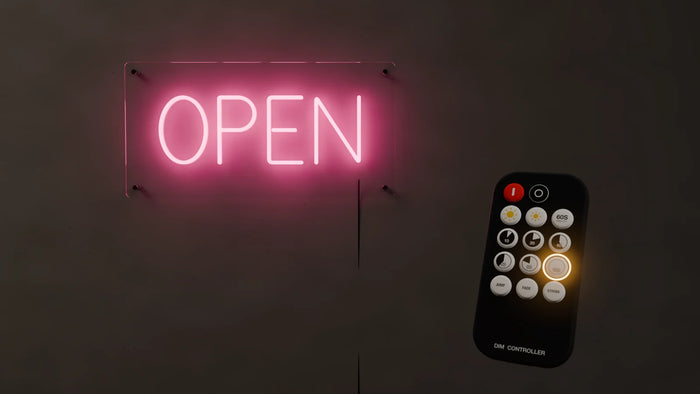
No. An LED neon sign contains no neon. It is a flexible silicone tube with LEDs inside, mounted on a cut acrylic backboard, designed to imitate the look of glass neon. The name describes the appearance, not the contents.
That is not a criticism. For most homes, weddings, gifts and small business interiors, LED is the better buy on almost every practical measure. But you should know what you are buying, and a lot of the industry is vague about it.
What is actually inside an LED neon sign
Real neon is a different object entirely: hand-bent glass tubing, evacuated, filled with neon or argon at low pressure, and lit by running a high voltage across it so the gas itself glows. If you want the background on that, it is in what is real glass neon.
What you give up
Three things, and they are worth naming plainly.
- ✗ Depth. In glass the gas glows through the whole volume of the tube. In LED neon the light is emitted from a strip and spread by a diffuser. Up close, especially at the ends of strokes and on tight curves, the difference is visible to an eye that knows what to look for.
- ✗ Provenance. A glass sign is a hand-made object and no two are identical. LED neon is fabricated to a drawing, which is a feature if you need consistency and a loss if the craft was part of the appeal.
- ✗ Very fine detail. Our minimum letter height is 5 cm, set by what a 6 mm tube can be bent into without the strokes running together. Glass has its own limits, but they are different ones.
What you gain, which is a longer list
- ✓ Low voltage. 12V DC rather than a high voltage transformer. Safer around children and pets, and far simpler to install and service.
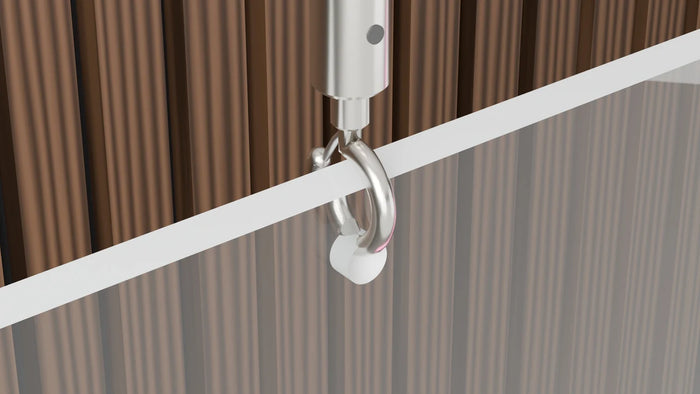
- ✓ Weight. Light enough for ordinary wall fixings on most sizes, where a comparable glass piece needs proper mounting.
- ✓ Survives shipping. Glass needs crating and careful handling. LED does not.
- ✓ Color freedom. Any color, plus color changing, dimming and remote control. Glass is one fixed color permanently, because the color is a property of the sealed gas and coating.
- ✓ Outdoor use. Our exterior signs are built and tested to IP67, and we can supply the test report.
- ✓ Cost. Substantially lower, because glass is priced as skilled hand labour.
Why the naming is confusing
Because "LED neon" describes an appearance, the industry uses it loosely, and some sellers lean on the ambiguity. You will see "neon sign" used for LED product without qualification, and occasionally you will see claims about LED that quietly borrow glass neon's heritage.
The same ambiguity shows up in support content. Most troubleshooting advice you will find online is written around glass failures, gas leaks and transformer faults, and simply does not apply to an LED sign. We wrote a separate LED troubleshooting guide for exactly that reason.
When the real thing is worth it
We make both, so this is not a pitch either way. If people will stand within a few feet of the sign and the medium is part of what you want, glass earns its premium: bars, restaurants, galleries, collections, statement pieces. If the sign hangs in a home, travels between events, goes outside, needs to change color or has a budget, LED is not a compromise, it is the correct tool. Most buyers who ask us this question want LED and are relieved to be told so.
See it before you decide
Send your text or logo and we will come back with a mockup and a written price, usually within 30 minutes to 3 hours, with no limit on revisions before you approve. If the project would genuinely be better in glass, we will say so.
Get a free mockup, try your own wording in the sign designer, or browse custom LED neon signs.
Frequently asked questions
Is an LED neon sign real neon?
No. An LED neon sign contains no neon gas. It is a strip of LEDs inside a flexible silicone tube, mounted on an acrylic backboard and run at low voltage, designed to imitate the appearance of glass neon. Real neon is hand-bent glass tubing filled with neon or argon and lit by a high voltage transformer, so the gas itself glows.
How can I tell whether a sign is LED or real glass?
Ask what voltage it runs at. LED neon runs on low voltage, typically 12V DC through a plug-in adapter. Glass neon requires a transformer and high voltage cable. Switched off, LED neon shows a white or pale silicone tube on an acrylic backboard, while glass shows clear or colored tubing with visible electrodes at the ends.
Is LED neon worse than real neon?
Not worse, different. Glass has more depth up close and is a hand-made object, while LED is lighter, cheaper, safer at low voltage, robust in shipping, available in any color including color changing, and straightforward outdoors. For homes, weddings, gifts and most small business interiors, LED is the better tool on almost every practical measure.
Is LED neon safe around children and pets?
The sign itself runs at 12V DC, so the low voltage side is not a shock hazard in the way a high voltage glass neon transformer is, and there is no glass to break. The mains side, meaning the plug and adapter, should be treated like any other appliance. This safety difference is one of the main reasons LED is usually recommended for signs in the home.
Why does most neon troubleshooting advice not work for LED signs?
Because it was written for glass. Advice about gas leaks, electrode failure and testing a high voltage transformer describes a different product. An LED neon sign has none of those parts, and its actual failure modes are the power supply, a loose connector, or water reaching a joint on an outdoor installation.
We have made neon since 1998, and we still make it ourselves. If something here does not answer your question, ask us.