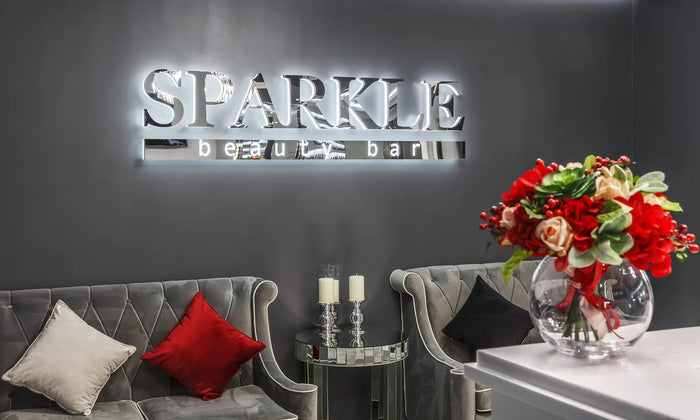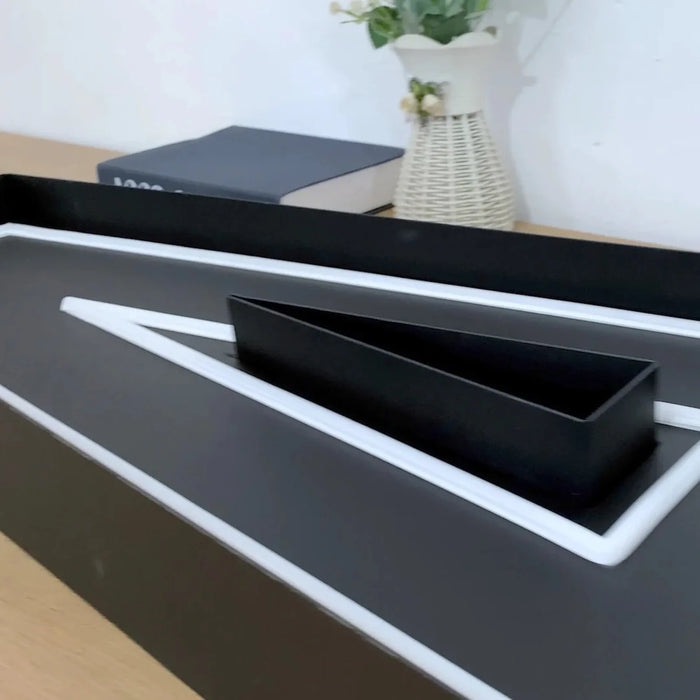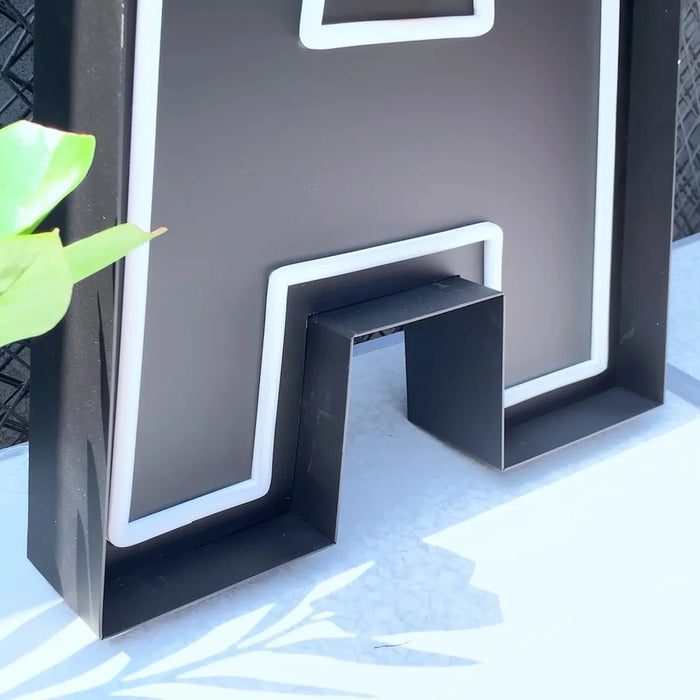
Halo lit letters have a solid opaque face and light that escapes behind them, throwing a glow onto the wall. The letter reads as a silhouette inside a halo.
It is the most architectural of the channel letter types, and it only works on a suitable wall. The wall is doing half the job.
How it works
The letter is a metal can with a solid face, usually stainless steel or aluminum, standing off the wall on spacers. LEDs inside face backwards. Light spills out around the letter and onto the wall behind it, so the letter itself stays dark and the outline glows.
The wall matters more than the letters
This is the point most people miss until it is installed. A halo letter projects its glow onto whatever is behind it, so the surface decides the result.
- ✓ Smooth, pale, matt surfaces. Rendered walls, painted concrete, smooth cladding. These give a clean even halo.
- ✓ A contrasting band behind the letters, if the main facade is unsuitable.
- ✗ Dark walls. There is nothing for the light to bounce off, and the effect largely disappears.
- ✗ Heavily textured brick or stone. The halo breaks up into patches instead of reading as a glow.
- ✗ Glass or mirrored facades. Nothing to catch the light.
Against the other types
| Halo | Front lit | Open face | |
|---|---|---|---|
| Face | Solid, opaque | Translucent acrylic | Exposed tube or lamps |
| Light direction | Backwards onto the wall | Forwards through the face | Forwards, undiffused |
| Night visibility | Good, atmospheric | Strongest | Strong, more vintage |
| Day visibility | Depends on the material | Good | Good |
| Wall dependent | Completely | Not at all | Not at all |
Who it suits
Halo reads as considered rather than loud, which is why it dominates in hotels, offices, galleries, clinics, professional services and premium retail. Where a front lit sign says here we are, a halo sign says we are here and we chose this carefully.
It suits simple, bold letterforms best. Very fine or highly detailed marks lose their halo into each other and the effect muddles.
What to send when you ask about one
A photograph of the actual wall, taken in daylight and again at night if you can, plus the overall width you have to work with and your logo in the best file you have. The wall photograph is genuinely the most useful thing, because it is what determines whether halo is the right recommendation at all.
Halo is the best looking channel letter type and the one most often specified on the wrong building. Send us a photograph of the facade before you fall in love with it. If the wall is dark or heavily textured, front lit letters will serve you far better, and we would rather say that at the enquiry stage.
Frequently asked questions
What are backlit halo letters?
Metal letters with a solid opaque face, mounted on spacers so they stand off the wall, with LEDs inside facing backwards. The light spills onto the wall behind, so the letter reads as a dark silhouette inside a glow. They are also called reverse channel or reverse lit letters.
What wall do halo letters need?
Smooth, pale and matt. Rendered walls, painted concrete and smooth cladding give a clean even halo. Dark walls give almost no effect, textured brick or stone breaks the halo into patches, and glass or mirrored facades have nothing to catch the light at all.
Are halo letters visible in daylight?
Less so than front lit letters, because during the day you only see the solid face. They read by their material, depth and shadow rather than by light. If daytime visibility is critical to your trade, discuss it before choosing halo.
What is the difference between halo and front lit letters?
Halo letters have an opaque face and throw light backwards onto the wall. Front lit letters have a translucent acrylic face and push light forwards through it. Front lit is brighter and works on any wall; halo is more architectural and depends entirely on the surface behind it.
What should I send you to get a recommendation?
A photograph of the actual wall in daylight, another at night if you can, the overall width available, and your logo in the best file you have. The wall photograph is the most useful part, because it decides whether halo is the right choice at all.
We have made neon since 1998, and we still make it ourselves. If something here does not answer your question, ask us.