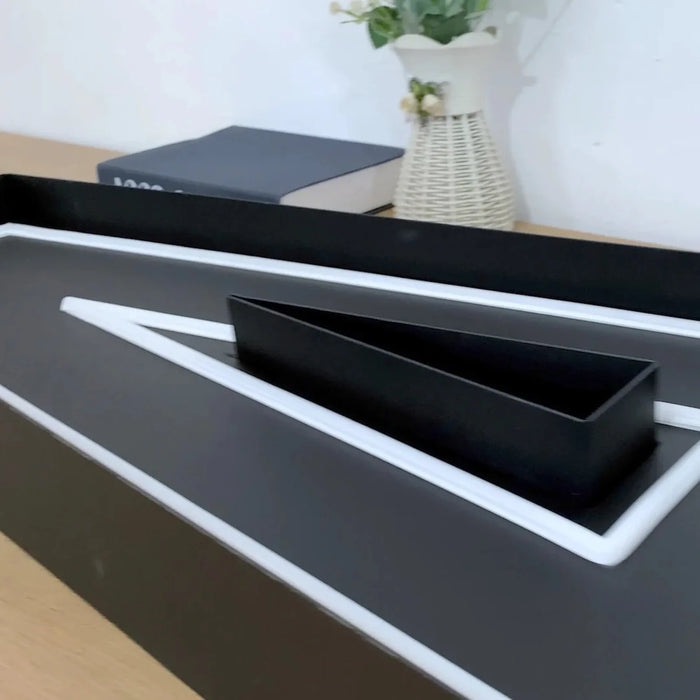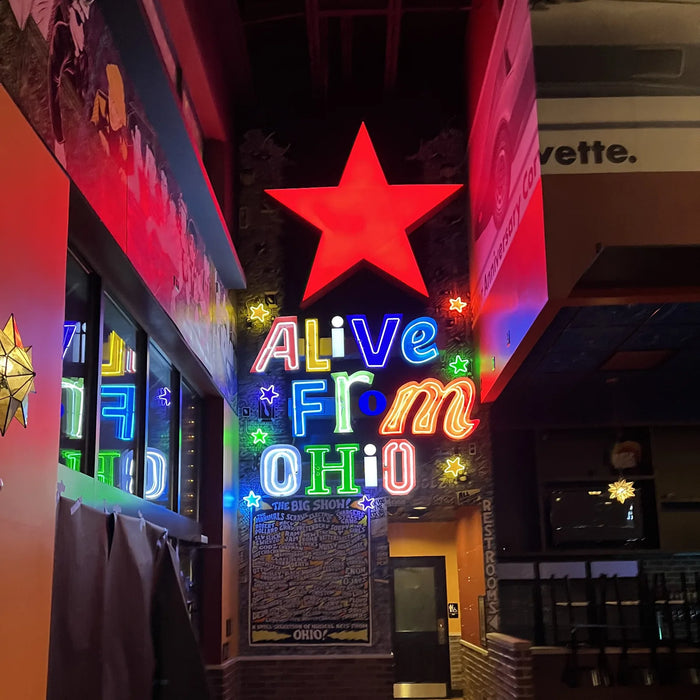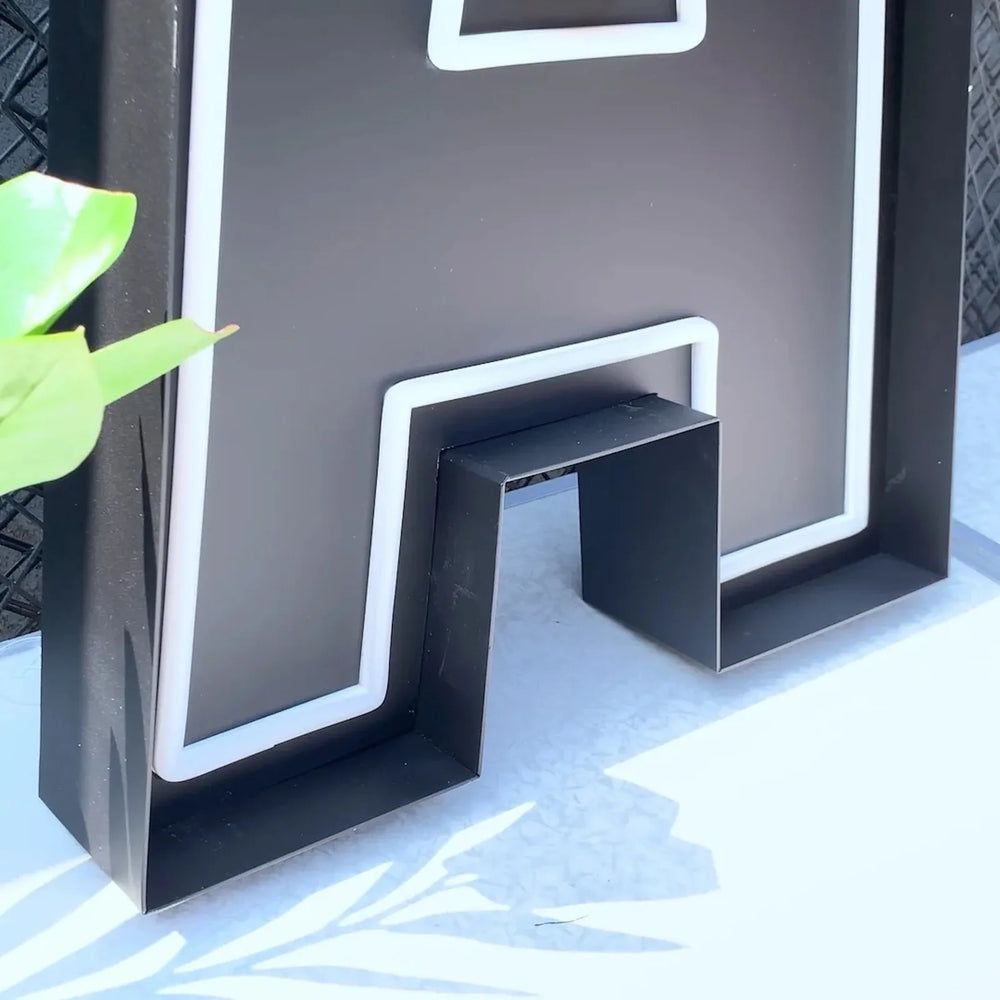
Three common methods: flush mounted straight to the wall, stud mounted on studs concealed behind, and raceway mounted on a single horizontal enclosure.
Which one you get is decided by the wall and by whether you can put holes in it, not by preference. A raceway exists because some walls and some landlords will not accept the alternatives.
Flush mounted
Each letter sits directly against the wall face, fixed through its base, with the wiring passing through a hole behind each letter into the building.
This is the cleanest look: nothing visible but the letters. It needs a sound wall, access behind it or into the cavity, and permission to make one penetration per letter plus the wiring holes.
Stud mounted
The letters stand off the wall on threaded studs, typically 25 to 50 mm clear of the surface. The gap creates a shadow line that gives the letters depth, and it is essential for halo lit letters, where the light needs somewhere to go.
Raceway mounted
The letters are pre mounted to a single horizontal metal enclosure, and that enclosure is fixed to the wall. All the wiring and often the power supplies live inside it.
| Flush | Stud | Raceway | |
|---|---|---|---|
| Appearance | Cleanest | Depth and shadow | Visible bar behind |
| Holes in the wall | Many | Many | Few |
| Alignment on site | Set out by the installer | Set out by the installer | Pre aligned in the workshop |
| Servicing | Access from behind | Access from behind | All in the raceway |
| Landlord acceptance | Hardest | Hard | Usually easiest |
What actually decides it
- ✓ Wall construction. Solid masonry, cavity, cladding, curtain walling and insulated render all behave differently.
- ✓ Rear access. Flush and stud mounting need somewhere for the wiring to go.
- ✓ Lease terms. Many restrict the number of fixings, or require full reinstatement at the end.
- ✓ Sign type. Halo letters require a stand off, so stud mounting is not optional for them.
- ✓ Weight. Stainless letters load a facade more than aluminum ones, which affects the fixing specification.
What to tell us
A photograph of the wall, what it is built from if you know, the mounting height, whether there is access behind it, and any restriction in your lease on fixings. Those five settle the method before anyone is on site, which is the point at which changing it becomes expensive.
Settle the mounting method at the design stage, not at installation. It is the item most often left until an installer is standing at the wall with the letters already made, and it is the one that most often turns into a delay. A photograph and a sentence about your lease at the enquiry stage prevents nearly all of it.
Frequently asked questions
How are channel letters mounted to a building?
Three common ways. Flush mounted directly against the wall for the cleanest look, stud mounted on threaded studs so the letters stand off and cast a shadow line, or raceway mounted to a single horizontal enclosure that carries the wiring and fixes to the wall with far fewer penetrations.
What is a raceway and is it worse?
A horizontal enclosure that the letters are pre mounted to, containing the wiring and often the power supplies. It is visible behind the letters, but it needs far fewer holes, arrives pre aligned, and makes servicing and removal simple. On a leased unit with restrictions on fixings it is usually the right answer rather than a compromise.
Why do halo letters have to stand off the wall?
Because a halo letter throws its light backwards onto the wall behind it. Pressed flat against the surface there is no gap for that light to escape into, so the effect simply does not happen. The stand off distance is part of the design.
What if my landlord will not allow holes in the facade?
Say so at the enquiry stage. A raceway concentrates the fixings into a small number of points and allows clean removal at the end of a lease, which is usually what makes it acceptable when flush or stud mounting is not.
What do you need to know about my wall?
A photograph, what it is built from if you know, the mounting height, whether there is access behind it, and any lease restriction on fixings. Those five settle the mounting method before anyone is on site, which is when changing it stops being easy.
We have made neon since 1998, and we still make it ourselves. If something here does not answer your question, ask us.