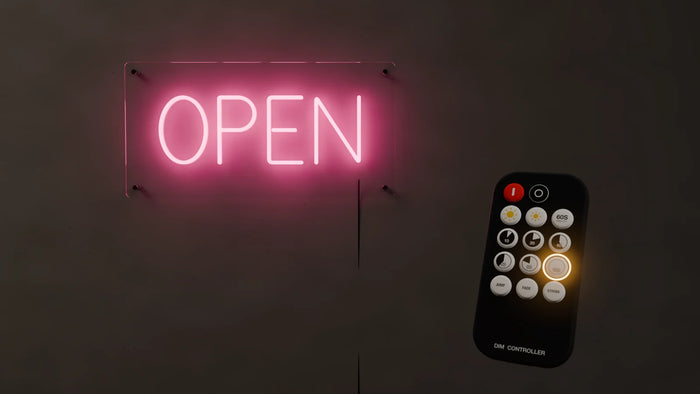
Yes. LED neon runs on 12V, produces almost no heat, contains no gas and no glass, and is safe to touch while lit.
The two things worth attending to are the mains transformer, which should be out of reach, and the cable, which should not dangle near a cot.
Why it is safe
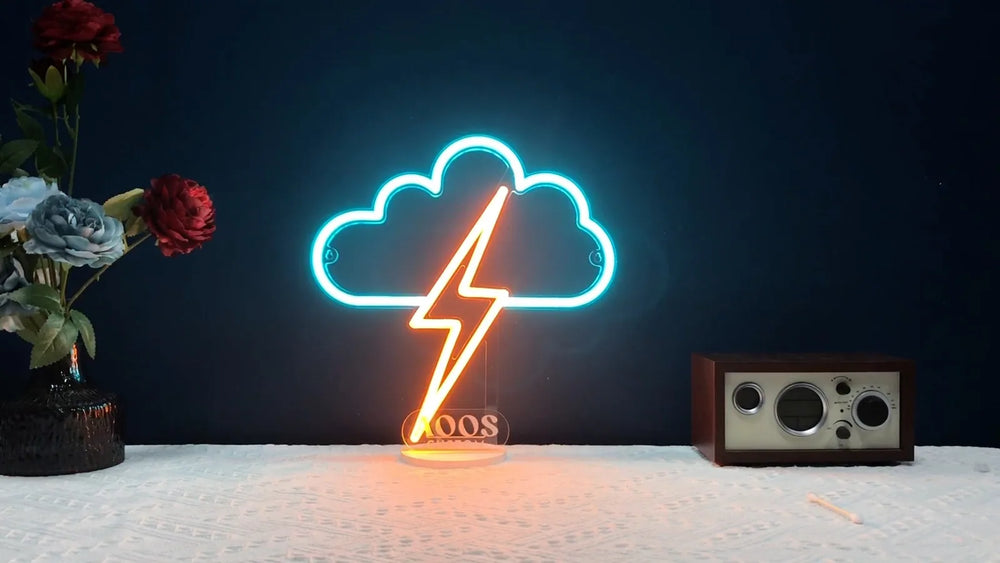
An LED neon sign is a flexible silicone tube with LEDs inside, mounted on an acrylic board. There is no glass to break, no gas under pressure, and no high voltage anywhere in the sign itself.
- ✓ No glass. Silicone tube flexes rather than shatters.
- ✓ No mercury or argon. Nothing to release if it is damaged.
- ✓ Barely warm. Not a burn risk, and not a fire risk against soft furnishings.
- ✓ UL listed adapter. The power supply is the tested part, and it is the part that matters.
Installing it in a child's room
The sign is the safe part. The installation is where care is worth taking.

| Do | Why |
|---|---|
| Mount well above reach, and not directly over a cot | Nothing should be able to come down into a sleeping space |
| Run the cable to the side, clipped or in trunking | A loose cable near a cot is the real hazard, not the sign |
| Put the transformer behind furniture or in a cable box | It is the only mains part in the system |
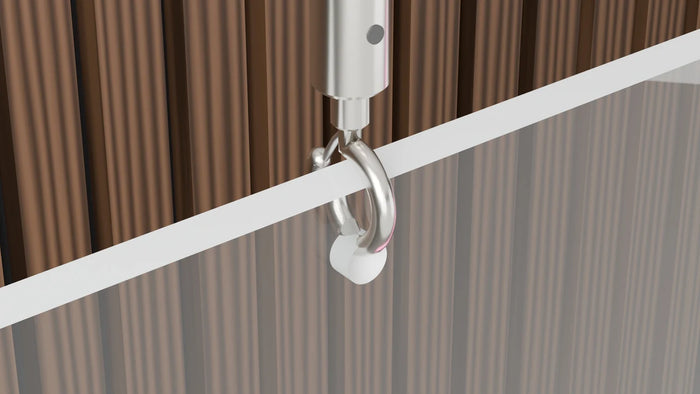
| Fix it properly for the wall type | A falling sign is the one genuine risk |
Which color for a child's room
Warm White is the usual answer, because it is the least stimulating and reads closest to a lamp. Light Pink and Ice Blue are popular and gentle. The saturated colors, Hot Pink, Red, Turquoise, are wonderful in a playroom and too energetic in a room meant for sleeping.

Older children
For a bedroom rather than a nursery, the considerations flip. Reach stops being a concern and the sign becomes a light source they will control themselves. Mount it where they can get to the dimmer, and expect it to be left on more than you planned. At 50,000 hours rated life, that is fine.
The sign itself is one of the safer things on a nursery wall. Spend your attention on the fixing and on the cable route, because those are the parts that depend on how it is put up rather than on how it was made. Mount it off to the side rather than directly above the cot and there is very little left to think about.
Frequently asked questions
Are LED neon signs safe for a child's bedroom or nursery?
Yes. The sign runs on 12V, gives off almost no heat, contains no glass and no gas, and is safe to touch while lit. The parts to think about are the mains transformer, which should be out of reach, and the cable, which should be routed to the side rather than hanging near a cot.
Do LED neon signs get hot?
Barely warm at most. They are not a burn risk and not a fire risk against curtains or soft furnishings. That is a real difference from real glass neon, which runs on high voltage and gets genuinely hot.
Can a neon sign be used as a night light?
Yes, and it is one of the most common uses in a nursery. Every sign includes an in line dimmer, so a Warm White sign turned right down is soft enough to sleep beside. It is also rated for 50,000 hours, so leaving it on overnight is not a problem.
What happens if a child pulls on the sign?
The tube is flexible silicone and will not shatter, and the acrylic board is not brittle. The risk is the sign coming off the wall, so use the fixing that suits your wall type properly and mount it out of reach rather than relying on the sign being sturdy.
Should the sign go directly above the cot?
We would put it off to one side instead. Nothing mounted on a wall should be directly over a sleeping child, however well it is fixed, and moving it a foot sideways removes the question entirely without changing how the room looks.
We have made neon since 1998, and we still make it ourselves. If something here does not answer your question, ask us.