A mockup is a drawing rendered on a screen. The differences are almost always color shade, how even the glow is, and perceived size, and the real sign wins on two of those three.
What the drawing is accurate about is shape, layout and dimensions. Those are exact, and they are the parts worth checking carefully.
What the drawing gets exactly right
- ✓ Dimensions. The measurements on the drawing are the measurements of the sign.
- ✓ Layout and proportion. Line breaks, letter spacing, where things sit relative to each other.
- ✓ Backboard shape. Cut to outline, rectangle or none, as drawn.
- ✓ The wording. Which is why reading it letter by letter is the single most valuable thing you do.
What differs, and why
Color shade. Your monitor mixes red, green and blue at whatever brightness and color temperature it happens to be set to. A neon tube emits one fixed wavelength. Pale colors drift most: Warm White and Light Pink both look stronger on screen than on a wall. Trust the color name over the rendering.
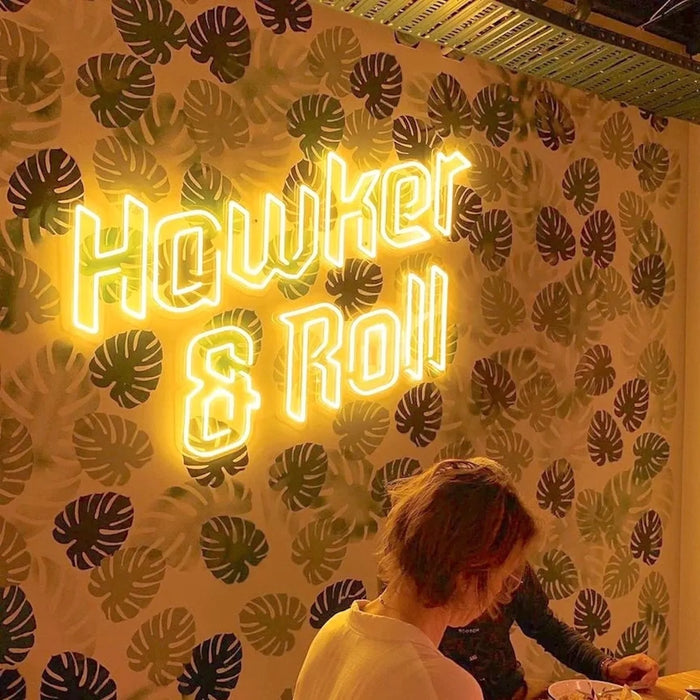
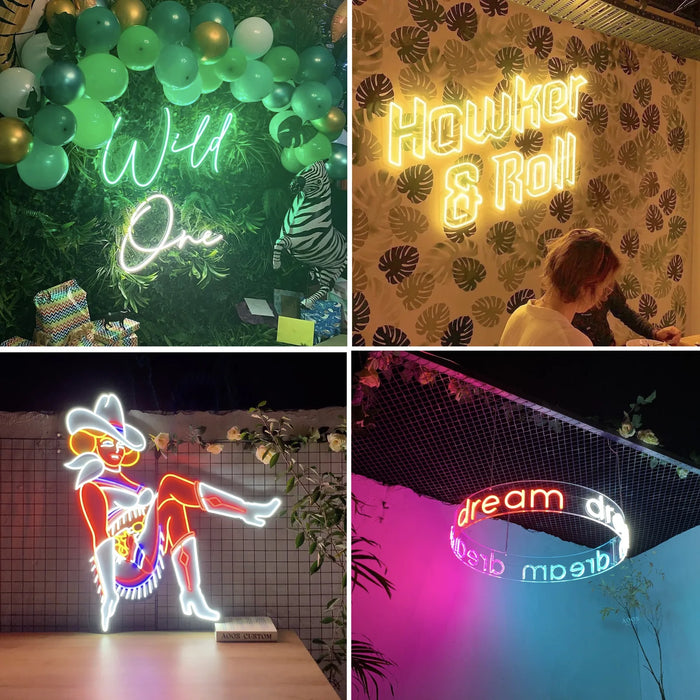
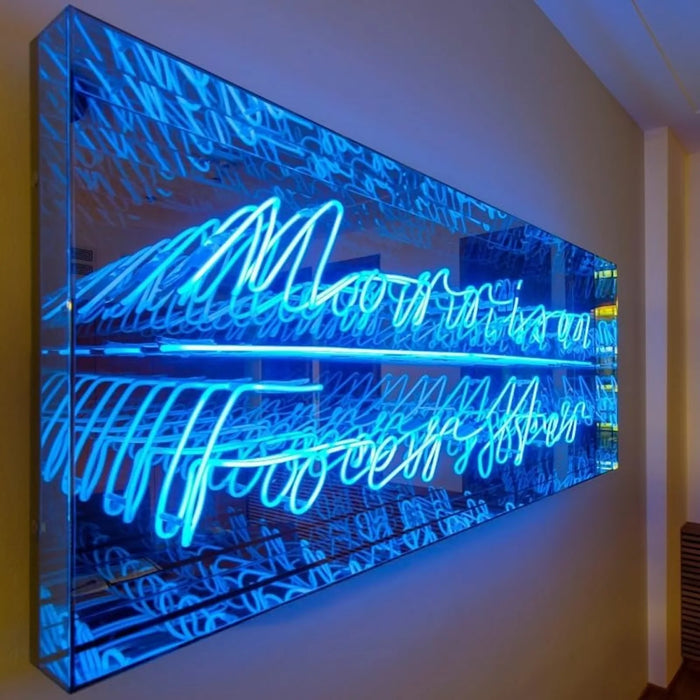
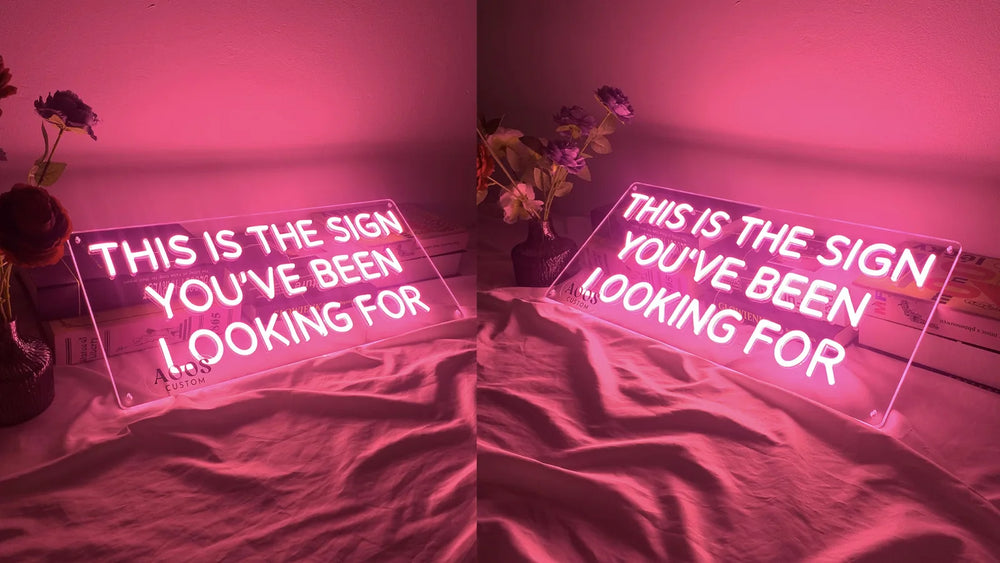
The glow. Renderings approximate glow with a blur, which tends to look harsher and more artificial than the real thing. Actual tube is softer, more even and has no visible dots. This is the difference that surprises people in a good way.
Size. Nothing on a screen conveys scale. A drawing viewed on a phone is a few centimeters across regardless of whether the sign is 60 cm or 150 cm. This is where the disappointment usually comes from, and it is entirely preventable.
The backboard catches people out too
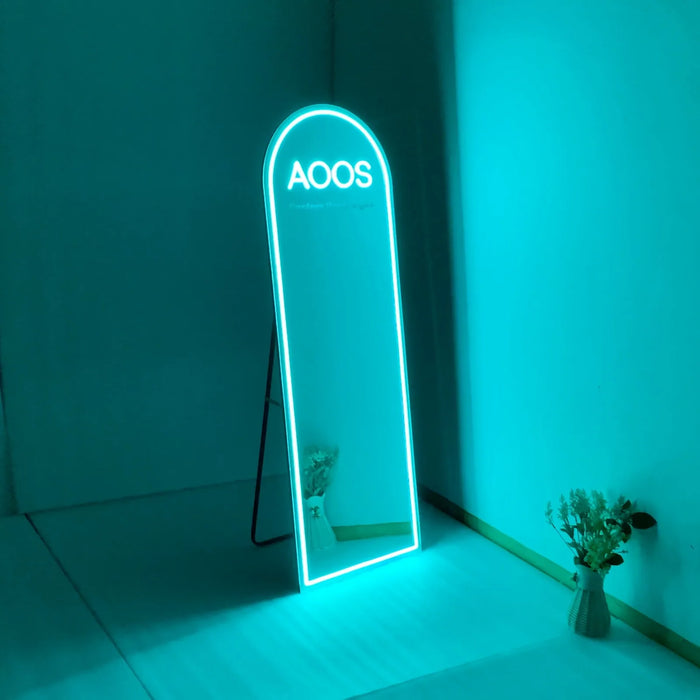
Clear acrylic is drawn as an outline because there is no honest way to render something transparent against an unknown wall. In reality it picks up whatever is behind it, so on a white wall it nearly vanishes and on a dark wall it shows as a faint edge and a soft shine.
How to close the gap before you approve
| Worry | What to do |
|---|---|
| Is the color right? | Ask for a photograph of the actual tube |
| Is it big enough? | Tape the dimensions on the wall |
| Will the glow look cheap? | Look at photographs of finished signs, not renders |
| Will the board show? | Tell us your wall color and ask |
All four are free and all four happen before approval, while revisions are still unlimited and cost nothing.
The gap between drawing and sign runs in your favor on light and against you on scale. Nobody has ever told us the glow was worse than the render. Plenty of people have told us they wish they had gone bigger. Spend your skepticism on the size, not on the picture.
Frequently asked questions
Will my neon sign look like the mockup?
In shape, layout and dimensions, exactly. The glow will look better than the render, because a rendering approximates it with a blur and real tube is softer and more even. The color may read slightly differently from your screen, and the sign will feel larger in the room than it looked on your phone.
Why does the color look different on my screen?
A screen mixes red, green and blue at whatever brightness and color temperature it is set to, while a neon tube emits one fixed wavelength. Pale colors drift most. Trust the tube color by name rather than the rendering, and ask us for a photograph of the real tube if a specific shade is critical.
Why does the clear backboard look different?
Because it is transparent and we cannot render your wall. In a drawing it is shown as an outline. In reality it takes on whatever is behind it: nearly invisible on a white wall, a faint edge and soft shine on a dark one.
How can I check the size before approving?
Mark the exact dimensions out on your wall with painter's tape and leave it there for a day. It is the only reliable way to judge scale, it takes five minutes, and it prevents the most common regret we hear about.
Can I ask for changes after seeing the mockup?
Yes, as many as you like. Revisions are unlimited and free right up until you approve the drawing, and nothing is built before that point. If anything on the drawing is unclear, ask rather than approving and hoping.
We have made neon since 1998, and we still make it ourselves. If something here does not answer your question, ask us.