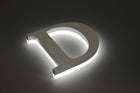
Front-lit channel letters, the storefront default

A translucent acrylic face lit from inside an aluminium channel. It carries furthest, matches your brand colour exactly, and is the construction most landlords and franchise standards already assume. If you are not sure which of the four letter types you need, this is usually the right answer. Send a logo and a wall width and you get back dimensioned shop drawings and a written price.

The construction is more standardised than most buyers expect. Returns are aluminium, faces are cast acrylic, and the face is held by a trim cap bonded around the perimeter. Return depth commonly runs 3 to 8 inches, with 5 inches the most typical. Knowing those figures is useful when you compare quotes, because a supplier working in noticeably lighter material is not selling you the same product.

Two things outside our control usually set the timeline. Your landlord sign criteria often fix letter height, lighting type and mounting method before you have any say, and in most municipalities the permit review takes longer than building the letters does. We draw to whatever the criteria specify and supply the dimensioned drawings and pattern files that a permit application and an installer both need. There are no design, artwork or revision fees, and no cap on revisions before you approve.

Shop drawings with every quoteNo design or revision feesExact brand colour matchingFree shipping in the US2-year warranty, free repair
Custom Front-Lit Signs
Will it arrive in time?

Opening on a fixed date? Check it before you design

Storefront signage misses deadlines for one reason more than any other: the permit, not the fabrication. Tell us the date you need to be lit and we will tell you honestly whether it fits.

  • Fabrication and shipping runs up to 30 days from drawing approval
  • Permit review is set by your municipality and commonly adds several weeks
  • Landlord sign criteria approval happens before either of those
  • Installation has to be booked, and is not included

Permit timelines are set by your municipality and are outside our control, so treat this as a planning guide rather than a commitment.

Buying guide

Four decisions before you order

The questions that actually change the drawing.

Why this is the storefront default

A translucent acrylic face lit from inside the channel, held by a trim cap around the perimeter. It lights evenly, reads from a moving car, matches brand colour precisely, and is the construction most tenant sign criteria already assume. Boring in the way good work boots are boring.

Compare all four types →

How tall the letters need to be

Letter height follows viewing distance, not wall width. For a sign facing the viewer, roughly 30 feet of readable distance per inch of letter height is the working figure. The one-inch-per-ten-feet rule quoted everywhere else is the harsher index for signs mounted flat alongside passing traffic, and applying it here makes every storefront sound like it needs letters three times taller than it does.

Work it out with real distances →

Raceway or flush, and who decides

Flush mounting fixes each letter to the facade individually and looks cleanest. A raceway carries them on one bar, which means a single point of building penetration. Landlord policy genuinely conflicts between properties: some mandate a raceway, others ban it and require a slim wireway. Read your sign criteria rather than assuming an industry norm.

The permit takes longer than the build

Fabrication and shipping run up to 30 days from drawing approval. Permit review is set by your municipality and commonly adds several weeks on top, and landlord approval happens before either. A landlord written approval is not a substitute for a permit. Get the criteria first, design to them second, file third.

What the permit process involves →

FAQ

Front-lit channel letter questions

Should I choose front-lit or one of the other types?

Front-lit if the sign has to be read from a distance or from a moving car, if brand colour has to match exactly, or if you are rolling out multiple locations and consistency matters. Choose open face when your brand competes on character rather than convenience. Choose halo backlit for a lobby or a clean flat facade. Choose trimless when a seamless face is worth the extra cost. The four are set side by side in our guide to channel letter types.

What is a trim cap?

The narrow retainer strip bonded around the perimeter of the letter where the acrylic face meets the aluminium return. It holds the face in place and finishes the seam, and it is commonly supplied in 3/4, 1 and 2 inch widths. The trade often calls it by the legacy brand name Jewelite. A trimless letter is simply one built without it, which costs more and requires tighter tolerances.

How deep are the letters?

Return depth commonly runs 3 to 8 inches, with 5 inches the most typical for storefront work. Depth generally scales with letter height, and it is often constrained further by landlord tenant criteria or by a projection limit written into the lease, so it is worth checking those before the depth is fixed on a drawing.

Can you match my exact brand colour?

Yes, and this is the main practical reason front-lit dominates franchise and multi-site work. The acrylic face carries the colour and the returns are finished to match, so the sign holds your brand palette both lit at night and unlit during the day. Send the colour reference with your logo at the quote stage.

Are the signs UL Listed?

We build with UL-standard components. That is a narrower claim than a UL Listed sign, and the difference matters to an inspector: listing the finished assembly is a separate certification that only a fabricator enrolled in a UL programme may mark. If your jurisdiction or landlord requires a listed assembly with the label applied, say so at the quote stage so it is specified from the start rather than discovered at inspection.

Do you install the sign?

No, installation is booked separately with a local installer and needs to be scheduled rather than assumed. What we supply is the dimensioned shop drawings and pattern files, which is exactly what that installer and your permit application both need. Fabrication and shipping run up to 30 days from drawing approval.

Front-lit channel letters for storefronts

A front-lit letter is a fabricated metal shell with a translucent acrylic face lit from inside, held in place by a trim cap bonded around the perimeter where face meets return. It is the most common storefront construction in the United States, and the one most tenant sign criteria are written around.

When front-lit is the right choice

Choose it when people read your name from a moving car, when brand colour has to match exactly, or when you are opening multiple locations and consistency matters more than character. Its weakness is the flip side of its strength: it is neutral. A bar or a barbershop competing on personality is usually better served by open face letters, and a lobby or clinic by halo backlit letters.

Sizing letters for the street

Letter height follows viewing distance rather than wall width. For a sign facing the viewer the working figure is roughly 30 feet of readable distance per inch of letter height. The one inch per ten feet rule quoted almost everywhere else is the separate and much harsher index for signs mounted flat alongside passing traffic, and repeating it as a general rule makes every storefront sound like it needs letters three times taller than it does. Our guide to storefront letter height works through it with real distances.

Permits, criteria and the order to do things in

Get the landlord sign criteria first, design to them second, file the permit third. Doing it in any other order is how projects lose weeks. Exterior illuminated signage needs a permit in most municipalities, and a landlord written approval is not a substitute for one. Read what the permit process involves, and if a single lit panel across the shopfront is still on the table, channel letters against light box signs covers that trade-off.